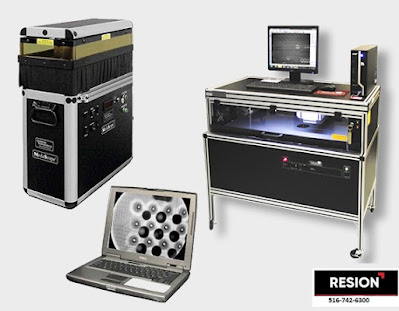
Popular Products
Popular Products


About Me

- Resion
- Resion is committed to complete customer satisfaction and regulatory compliance by maintaining a system of continuous improvement of our processes, products, and employee training. We strive to achieve best in class among our competitors.
Recent Products
Showing posts with label Counterfeit Mitigation. Show all posts
November 07, 2019
Understanding Why Having Visual Inspection Components Systems Is Vital
You have a well-established electronics supplying business with a huge clientele. But do you have all the required machinery that will help you sell authentic products to the customers and keep them retained? Many business houses ignore installing or making use of the Visual Inspection Components System.
Major retailers and suppliers of electronic components make use of these comprehensive electronic visual inspection systems to ensure that they are not supplying defective and damaged electronic components to the customers. Major industries around the world make use of visual inspection systems to avoid any discrepancies and machine errors. It is essential for the manufacturers of electronic components to ensure that the electronic components are compliant with the USA electronic components enforcements and laws. Also, it is important that these are compliant with the FCC certification.
Why choose these systems?
It is important for the inspectors who conduct the inspections to understand the customer contract requirements properly. Major industrialists and manufacturers of electronic components make use of customer designed plans to provide services. It is the job of inspectors to check the components and electronic systems properly before sending them to the final consumers. The inspectors will have to check the chassis, functionality, and history of the components.
The inspectors have to ensure that the quality of the electronic components is not compromised and is inspected under the following quality clause IDEA STD-1010, AS6081, CCAP101. Apart from this, the other quality standards that have to be maintained are ANSI/ASQ Z1.4.
What does electronic visual inspection comprise of?
The following steps are included in the electronic visual inspections:
It is best to conduct The Visual Inspection of Components System once the electronic device has been manufactured and is ready to be used by the end consumer. Also, make sure you find a reliable distributor for this purpose.
Major retailers and suppliers of electronic components make use of these comprehensive electronic visual inspection systems to ensure that they are not supplying defective and damaged electronic components to the customers. Major industries around the world make use of visual inspection systems to avoid any discrepancies and machine errors. It is essential for the manufacturers of electronic components to ensure that the electronic components are compliant with the USA electronic components enforcements and laws. Also, it is important that these are compliant with the FCC certification.
Why choose these systems?
It is important for the inspectors who conduct the inspections to understand the customer contract requirements properly. Major industrialists and manufacturers of electronic components make use of customer designed plans to provide services. It is the job of inspectors to check the components and electronic systems properly before sending them to the final consumers. The inspectors will have to check the chassis, functionality, and history of the components.
The inspectors have to ensure that the quality of the electronic components is not compromised and is inspected under the following quality clause IDEA STD-1010, AS6081, CCAP101. Apart from this, the other quality standards that have to be maintained are ANSI/ASQ Z1.4.
What does electronic visual inspection comprise of?
The following steps are included in the electronic visual inspections:
- Pin verification for any variation
- Checking whether the component type is in accordance with the quality standards.
- Checking for tarnish
- Checking for oxidation
- Checking for the presence of coplanarity and bent leads
- Checking the components for the presence of FOD, any paint splatters, and coating materials
It is best to conduct The Visual Inspection of Components System once the electronic device has been manufactured and is ready to be used by the end consumer. Also, make sure you find a reliable distributor for this purpose.
July 18, 2019

Top 4 Essentials For Effective Inventory Management

Your business is probably touching new heights. The sales figures are reflecting a good financial standing. The customer footfall is also on a roll, and the amount of profit that you are earning is also good. Everything just seems to fall in place, until that moment where you conduct an analysis of individual article performance in the inventory.
When conducting this analysis, you will find certain loopholes that may impact the profitability of your electronics components manufacturing and production unit. Maybe the available stock is not in accordance with the sales projection or your most sold item is out of stock and you are not aware of that, what would you do in such a situation? The best way to tackle this problem is to practice inventory management solutions.

A well planned electronic components stock management approach is a great way of handling this situation and managing the inventory.
Below mentioned are some essentials that will help you with effective inventory management.
- Item identification: Assigning the stock items with individual identification marks is an effective and popular method of inventory control and management. When used in supply chain management, this method is known as SKU (Stock Keeping Unit). This method is beneficial as it helps in tracking the movement of the articles and making an analysis.
- Restock the items: Don’t delay restocking your inventory. You obviously do not want customers turning back and affecting your profitability. So make sure that you keep a check on the stock availability and re-stock as soon as you run out of items.
- Review the inventory: Inventory review is the most important part of effective inventory management. This practice is known as stocktaking. Ensure that you review your inventory from time to time. This will help you in knowing which items are the best-sellers and bring in revenue and which are just a waste of investment.
- Maintain records: Maintained stock records is another crucial part of the inventory management practice. Keep a record of each item in your inventory.
Now that you are aware of the essential Inventory Management Solutions that will help you in effectively managing the inventory. You can make use of various other methods too such as SKUs and control measures. There are a number of software available that can help you in keeping a record of the inventory so you never face a component shortage.
July 11, 2019
The Application Of Electronic Ceramic Components In The Electronic Industry

Are you aware of the fact that approximately $4.5 trillion industries across the globe could not survive without the use of electronic ceramic components?
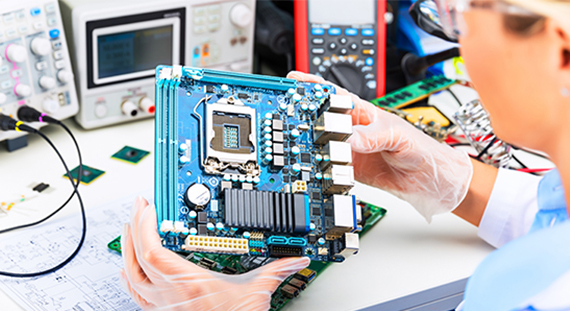
The use of ceramic based electronic components cannot be denied in industries that manufacture smartphones, electronics such as television sets, digital computers, and various other automotive electronics. The ceramic based electronic components are also extensively used in the medical industry.

Electrical conductivity of the ceramic components
The ability of a metal to produce an electric current is termed as electrical conductivity of a particular metal. Ceramic metals come in a wide variety. Most of the ceramic components are dielectric in nature.
The electrical conductivity of ceramic metals depends on the frequency of its application. Temperature of the metal also plays a great role in determining the conductivity of the ceramic.
The Electronic Ceramic Components that are used as electrical insulators across industries are inclusive of hermetic packaging, protective components, spark plugs, and ceramic arc tubes. These parts are most commonly used for covering power lines and wires without a covering.
The electronic ceramic components are widely used in various applications in industries such as aerospace, marine, transportation, and automobiles.
The superconducting properties of ceramics
The ceramics are very low on electrical conductivity. But some of the ceramics also possess superconducting properties. For example, Lanthanum-barium-copper oxide is a ceramic which may produce electric currents at high degrees such as 138K.
This type of superconductor ceramic is also known as High Temperature Superconductors.
What are the magnetic properties of ceramic?
The magnetic ceramics are produced by making use of sintering technology. In this, the iron oxide and strontium carbonates are mixed with small quantities of other metal oxides.
The name used for magnetic ceramics is Ferrites. The two main types of magnetic ceramics are as follows:
- Anisotropic ceramic magnets
- Isotropic ceramic magnets
The usage of Electronic Ceramic Components is extensive across numerous industries such as aerospace, transmission, communication, and many others. More and more people nowadays are making use of ceramic components in the electronic industry.
April 26, 2019
An Insight Into AC/DC Converters
Have you ever noticed small circuits lingering out of electrical equipments? These are generally AC/DC converters. AC/DC converters can be defined as electrical circuits that change or transform the AC (alternating current) into the DC (direct current). The technique of AC/DC is widely used in the electronic equipment industry. A lot of power electronic applications are used based on the AC/DC factor.
There are a lot of AC/DC converter accessories available in the market that can be made use of for efficient working of the electronic equipments. Resion is a leading supplier of AC-DC converters. Browse through over 7,00,000 obsolete equipment parts such as M3-17, CINT3110A1708K01, PSPD-2515, ERJ-8ENF75R0V, DB15-15, and HE5-18/OVP. Apart from these, there are various other equipment parts also available.
AC/DC converters are mostly used in equipments where the power consumption (input) is between 50 Hz-60 Hz sine wave AC. This sine wave requires total power conversion for DC outputs. Rectifiers are used in equipments that help in the conversion of the alternate current to the direct current. Regulators are also used to keep the voltage in check. The direct current might pulsate occasionally, thus, it is important to install reservoir capacitor.
Electric circuits also require in-built AC power source. This helps in saving a lot on electricity and helps in reducing the size and cost of the utilization. It is essential to be aware of the consumption needs and practical usage of AC/DC converters.
Types Of AC/DC Converters
There are two types of AC/DC converters, namely:
- Switching Devices: These devices are complex to use. A switched-mode power supply, commonly known as the SMPS is installed in the converter. These converters come with a switching regulator that can be used to efficiently save energy and prevent any wastages. These converters are light and small in size as compared to other AC/DC converter devices.
- Linear Devices: These devices are cheap and easily available in the market. These are large in size as compared to switching devices.
It is not important for AC/DC converters to have just one power outlet. There can be multiple outlets attached to one AC/DC converter.
Are you looking for AC/DC converters accessories? Consult the experts at Resion. For more information, call at 516-742-6300
February 15, 2019

Top Methods Of Detecting Counterfeit Electronic Components

The electronic component manufacturing industry has faced the challenge of counterfeit electronic components since its inception. It is hard to ascertain the reliability of any electronic component, therefore, techniques such as electrical visual inspection have been developed.
Counterfeit electronic components, more easily defined as duplicate or fake components have always been a problem in the electronic component manufacturing industry. Manufacturers develop new ways and techniques of counterfeiting parts equipment and mask the authenticity of a genuinely designed component. The main problem that counterfeited equipment pose to the electronic components manufacturing industry is that they hamper the possibility of inventive growth, bringing down the economic value as well as the economic goodwill associated with a particular electronic component. Counterfeit products are a result of refurbishing old, used electronic equipment or name swapping.

Counterfeit electronic components can lead to various mishaps and hazards while being continuously used. They might not show any problem during the initial testing phase, but can lead to equipment failures later on. Not only can they cause system failures, but these can also pose a threat on the lives of the workers testing these components. However, having trained personnel on board can help in detecting and identifying a counterfeit electronic component.
Below mentioned are the top methods of detecting counterfeit electronic components.
Below mentioned are the top methods of detecting counterfeit electronic components.
- Monitoring discrepancies: Manufacturers can note the component specifications such as the length, height, and width and then draw a comparison with other components can help in estimating the authenticity of the equipment. In case you find any mismatch in the specifications of the component, then you might have to further investigate.
- Visual inspection equipment: Visual inspections can be conducted in order to determine if an electronic component part is genuine or fake. Again, one can take specifications and compare to find out about any discrepancies.
- X-Ray inspection: This is another technique to analyze the internal functioning of the electronic equipment. X-Ray can easily point out any problems in the component by marking the use of fake die, wire bonds, and other issues.
- Resurfacing: Nowadays, materials such as plastic and fine quality glass is being used to replace genuine electronic components and produce a more cheaper range. This process is known as blacktopping. During this process, the original markings of the components is sanded off and a coat of polymer is applied to cover them up. However, sometimes, blacktopping results in leaving visible clues about the counterfeit such as indents on chip or unnatural smoothness on the surface of the component.
If you are looking for genuine electronic components, visit Resion. For more information, call at 516-742-6300
Subscribe to:
Posts (Atom)
The Benefits of X-Ray Inspection Equipment in Quality Control.
Assuring product quality is of utmost importance to businesses in today's industrial world. One tool that has gained popularity for qu...