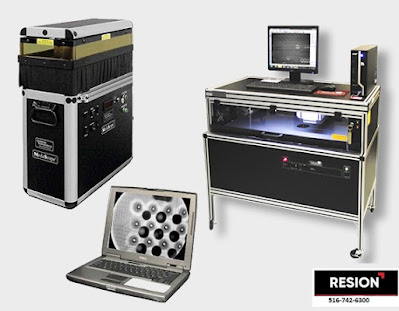
Popular Products
Popular Products


About Me

- Resion
- Resion is committed to complete customer satisfaction and regulatory compliance by maintaining a system of continuous improvement of our processes, products, and employee training. We strive to achieve best in class among our competitors.
Recent Products
The Benefits of X-Ray Inspection Equipment in Quality Control.
Assuring product quality is of utmost importance to businesses in today's industrial world. One tool that has gained popularity for quality control across many industries is X-ray inspection equipment.
X-ray inspection equipment penetrates materials to show internal structures and faults using high-frequency electromagnetic pulses. Several industries, including manufacturing, pharmaceuticals, electronics, and food & beverage, can benefit from using this technology.
In this write-up, we'll go through the benefits of using x-ray inspection equipment for quality control, including its ability to spot impurities, increase production efficiency, and ensure product safety.

A few benefits of X-ray inspection tools for quality control are:
- Finding Errors.
Manufacturers can spot problems early in the production process due to the use of X-ray inspection equipment, which is a vital tool for finding product flaws. With the aid of this cutting-edge technology, manufacturers may identify various defects, including fractures, voids, and other abnormalities that may not be evident to the naked eye.
Manufacturers may assure the quality and safety of their products before they are sent to the market by employing X-ray inspection technology, lowering the possibility that consumers would receive faulty products. Ultimately, this helps the manufacturer establish a solid reputation, boosting client happiness and loyalty.
2. Ensuring Safety.
In several industries, including the food and pharmaceutical sectors, X-ray inspection technology is essential to verifying the safety of the products. This device can identify potential safety issues and stop dangerous products from reaching customers since it can detect foreign objects like metal shards or glass.
The use of X-ray inspection equipment is crucial to upholding high standards of quality and safeguarding the general public's health and well-being in sectors where product safety is crucial, such as the food and pharmaceutical industries. This device helps to reduce the danger of product recalls, regulatory penalties, and, most critically, harm to customers by identifying and removing potentially hazardous materials.
3. Improving Productivity.
Due to its capacity to automate the inspection process and increase production, X-ray inspection equipment has become popular among manufacturers. The use of time-consuming human inspections is decreased by the use of X-ray equipment's quick and accurate defect detection capabilities. Manufacturers can boost output and lower costs by automating the inspection process since it allows them to produce more goods in less time and with fewer mistakes.
A better quality control and product safety level can also be achieved with X-ray inspection equipment, which can assist in ensuring compliance with regulatory standards. Organizations wanting to boost output and market competitiveness should invest in X-ray inspection equipment.
4. Enhancing Quality.
X-ray inspection equipment is a significant tool for companies that want to improve the quality of their products. By providing incredibly detailed images of the products, this technology can help uncover any potential quality issues and let manufacturers make the appropriate adjustments.
Overall, consumer happiness and the brand's reputation may get benefitted from improved product quality. Manufacturers may guarantee that their goods satisfy the highest standards of quality with X-ray inspection equipment, which may result in higher sales and customer loyalty. Manufacturers who invest in this technology might establish themselves as market leaders and acquire a competitive advantage.
5. Regulatory Meeting Requirements
For enterprises striving to satisfy product safety and quality regulatory standards, X-ray inspection equipment is a vital tool. X-ray inspection can be extremely useful in assuring compliance in sectors with tight product safety rules, such as the food and pharmaceutical industries.
Manufacturers can identify problems early and take corrective action before items reach the market by employing X-ray equipment to scan products for contamination, flaws, and other possible issues. In addition to ensuring product safety, this can assist manufacturers in avoiding expensive regulatory fines and reputational harm.
Finally, businesses can show a solid commitment to complying with regulatory standards and delivering safe, high-quality products for their customers by utilizing X-ray inspection equipment as a part of their quality control operations.
Conclusion
Investing in high-quality X-ray equipment can help you produce better goods that will ultimately increase sales. You need to pick the top supplier of this equipment if you want to acquire the most advanced and reliable technology available.
So, you can raise product quality, save waste, and increase productivity with the appropriate X-ray equipment. Therefore it is a good move to identify the best supplier for your X-ray equipment needs and then reap the rewards of this investment for your company!
What are the inspection methods used for quality control of Electronic Ceramic Components?

Electronic ceramic components are equipped with many ideal properties for different applications in power electronics. These are frequently used in manufacturing many kinds of equipment for medicine, machinery, electronic appliances, and many other industries. The ceramics are used in circuit boards and are primarily responsible for ensuring the machine’s proper functioning. Electronic ceramic components offer a higher conductivity, making the material ideal for various applications in communication systems, aircraft circuit boards, satellite technology, wireless devices, and more. However, with rapid IT innovations, the quality control for these components has become much more challenging.
Following are the various inspection methods used for quality control of electronic ceramic components:
Visual inspection
Visual inspection is the primary quality control method used for every type of electronic appliance to determine if there are any visible defects in the electronic appliances or parts. An InterCEPT certified inspector inspects the packaging and labels on the electronic component for a detailed visual examination for any typos, fake numbering, blacktopping, and many other such indicators.
X-Ray testing
If the visual inspection does not reveal any discrepancies, next, X-Ray inspection is used to verify the inner workings and structure of the electronic ceramic components. If there are any defects, unusual size, exceeding quantity, or indication of tempering, it will be revealed through X-ray testing. The images of the component can be compared with the images of the original parts to detect any counterfeits.

Decapsulation
Sometimes even X-Ray testing cannot give conclusive results. Thus, additional testing such as failure analysis testing techniques is used to verify the authenticity of the electronic ceramic parts. Decapsulation is a destructive test that is usually performed on a sample component using failure analysis (FA), constructional analysis (CA), and destructive physical analysis (DPA) techniques. In decapsulation, an internal visual inspection is first conducted using a high-powered microscope to verify the manufacturer’s markings, defects, typography, part numbers, mechanical accuracy, and authenticity. Next, chemical etching methods are used to verify each component used in the manufacturing.
There are many different types of decapsulation methods used for different kinds of electronic device components, depending on their application purposes. Various chemicals (such as sulfur acid, nitric acid, etc.) are used for decapsulation, rendering the sample unusable in most cases since it is a destructive testing method. Therefore, it is usually performed after radiography, external visual examination, leak check, and other inspection testings as required depending on the component to ensure its authenticity. If the sample fails the analysis, the whole batch will need to be discarded.
The electronic ceramic component inspections can be conducted by your in-house certified team or a certified third-party provider offering reliable visual, x-ray, and decapsulation testing services. If you lack the in-house quality control capabilities, get in touch with our team for reliable inspection services to meet all your needs.
Role of the x-ray inspection system in enhancing quality control and counterfeit mitigation in the electronics industry

Counterfeit electronics components are the biggest threat to the electronics industry supply chain. As per the statistics, almost 20% of electronic components in distributors' supply chains are found to be counterfeit every year. Counterfeit electronic parts which are not identified on time can find their way as part of a computer motherboard, monitor, or other electrical appliance. They can cause functionality issues, short circuit risk, overheating, or other problems which can lead to the failure of the machine. As per research, counterfeit parts lead to damages costing more than $100 million every year. Thus, to minimize the risk of counterfeit components and enhance quality control, many inspection and testing techniques are used by the distributors and suppliers in the electronics industry, such as visual testing, X-ray inspection, electrical testing, and more.

How can X-Ray inspection help?
X-Ray inspection is one of the most widely used techniques for counterfeit mitigation and effective quality control in the electronics industry. The X-ray inspection systems are specifically designed to verify the inner structure and functional elements of electronic devices without opening or using destructive testing techniques. X-Ray inspection is used to identify components inside the package for their shape and size accuracy compared to the images from the original part made by the manufacturer. It helps identify any defects, proof of tampering, or counterfeit parts in the electronics industry.
The electronics X-Ray inspection is usually the next step after the visual inspection of the electronic component has been performed. It enables electronic suppliers and buyers to ensure the authenticity of the product and detect fraud. The failure to find a defective component may lead to fatal results. Therefore, if the authenticity of a supplied product cannot be verified using visual inspection or electronic testing, an X-Ray inspection is conducted to find any abnormalities in the electronic parts’ composition.
X-Ray inspection is a preferred method of counterfeit mitigation and quality control as it is a completely non-invasive and non-destructive testing technique that is relatively cost-effective. It saves the distributors from the risk of destroying or disassembling a product for testing with destructive methods such as decapsulation testing, which can be quite time-consuming.
If you are looking for a reliable supplier with extensive experience in supplying electronic components and in-house X-ray inspection systems for counterfeit detection, get in touch with our team for all your requirements.
How X-Ray Inspection Systems Ensure Quality in the Food Industry?


Some of the benefits of X-ray inspection systems
- Excellent design: easy to maintain, easily accessible, hygienic, and easy to maintain without the use of tools.
- Thanks to the modular design, the installation of these devices are hassle-free
- These x-ray inspection systems are designed to be in compliance with the food industry standard such as HACCP, IFS, and BRC.
- These systems offer outstanding radiation protection as compared to the German X-ray Regulation (Röntgenverordnung − RöV) (< 1 mSv/a)
- They detect contaminants from 0.3 mm in particle size
- These systems can be used to detect contaminants in organic products in compliance with Directive 1999/2/EC because of their low radiation energy level.
- They are able to detect contaminants including glass-fiber-reinforced plastics in products, rubber, Teflon, PVC, raw bones, stones, ceramic, glass, and metals.
- Comprehensive inspection, even in closed packaging
- Detection of broken, misshapen, and lumpy products.
- Detection of trapped air in tubes and cans
- They are equipped with innovative analysis software and thus, they perform at a very high-speed.
- They can easily inspect various products simultaneously, which makes it easier to put various packaging lines under one inspection system.
- It is equipped with an easy user interface that ensures easy operation and swift overview.
- Diagnosis of metal contaminants from non-ferrous metals and non-magnetic stainless steels
Guide To Choose The Right X-Ray Testing & Inspection Equipment


Below mentioned are the essential points that one needs to consider while choosing X-Ray testing & Inspection Equipment
- Quality of the images: X-Ray testing involves advanced technology and comprehensive softwares. There are a lot of factors that affect the picture quality of the images such as power consumption, voltage, size of the spot, picture resolution, X-Ray proximity and many other things. While selecting an X-Ray system it is crucial to first test it and then make a decision.
- Consider the D’s: D in an X-Ray system stands for dimensions. You can choose between three different categories of dimensions, namely, 2D, 2.5D, and 3D. D consideration is necessary while selecting an X-Ray system. One can ascertain the requirements and then select a system according to the needs.
- Convenience: Zero down an option that can be conveniently used. X-Ray testing equipment can be complicated and difficult to use. It is best to purchase a system that you can use conveniently for performing inspections.
- Upkeep and maintenance: It is important to inform the Health and Safety Executive (HSE) before using the X-Ray system. You might also have to involve a few other officials to get approvals for making use of this instrument. Since it is an electronic device, it will require some upkeep and maintenance.
Are you looking for X-Ray testing & Inspection equipment? Consult the experts. For more information, call at 516-742-6300
The Benefits of X-Ray Inspection Equipment in Quality Control.
Assuring product quality is of utmost importance to businesses in today's industrial world. One tool that has gained popularity for qu...