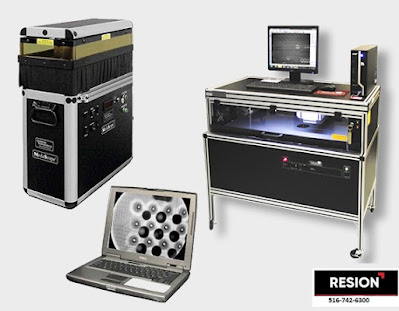
Popular Products
Popular Products


About Me

- Resion
- Resion is committed to complete customer satisfaction and regulatory compliance by maintaining a system of continuous improvement of our processes, products, and employee training. We strive to achieve best in class among our competitors.
Recent Products
The Benefits of X-Ray Inspection Equipment in Quality Control.
Assuring product quality is of utmost importance to businesses in today's industrial world. One tool that has gained popularity for quality control across many industries is X-ray inspection equipment.
X-ray inspection equipment penetrates materials to show internal structures and faults using high-frequency electromagnetic pulses. Several industries, including manufacturing, pharmaceuticals, electronics, and food & beverage, can benefit from using this technology.
In this write-up, we'll go through the benefits of using x-ray inspection equipment for quality control, including its ability to spot impurities, increase production efficiency, and ensure product safety.

A few benefits of X-ray inspection tools for quality control are:
- Finding Errors.
Manufacturers can spot problems early in the production process due to the use of X-ray inspection equipment, which is a vital tool for finding product flaws. With the aid of this cutting-edge technology, manufacturers may identify various defects, including fractures, voids, and other abnormalities that may not be evident to the naked eye.
Manufacturers may assure the quality and safety of their products before they are sent to the market by employing X-ray inspection technology, lowering the possibility that consumers would receive faulty products. Ultimately, this helps the manufacturer establish a solid reputation, boosting client happiness and loyalty.
2. Ensuring Safety.
In several industries, including the food and pharmaceutical sectors, X-ray inspection technology is essential to verifying the safety of the products. This device can identify potential safety issues and stop dangerous products from reaching customers since it can detect foreign objects like metal shards or glass.
The use of X-ray inspection equipment is crucial to upholding high standards of quality and safeguarding the general public's health and well-being in sectors where product safety is crucial, such as the food and pharmaceutical industries. This device helps to reduce the danger of product recalls, regulatory penalties, and, most critically, harm to customers by identifying and removing potentially hazardous materials.
3. Improving Productivity.
Due to its capacity to automate the inspection process and increase production, X-ray inspection equipment has become popular among manufacturers. The use of time-consuming human inspections is decreased by the use of X-ray equipment's quick and accurate defect detection capabilities. Manufacturers can boost output and lower costs by automating the inspection process since it allows them to produce more goods in less time and with fewer mistakes.
A better quality control and product safety level can also be achieved with X-ray inspection equipment, which can assist in ensuring compliance with regulatory standards. Organizations wanting to boost output and market competitiveness should invest in X-ray inspection equipment.
4. Enhancing Quality.
X-ray inspection equipment is a significant tool for companies that want to improve the quality of their products. By providing incredibly detailed images of the products, this technology can help uncover any potential quality issues and let manufacturers make the appropriate adjustments.
Overall, consumer happiness and the brand's reputation may get benefitted from improved product quality. Manufacturers may guarantee that their goods satisfy the highest standards of quality with X-ray inspection equipment, which may result in higher sales and customer loyalty. Manufacturers who invest in this technology might establish themselves as market leaders and acquire a competitive advantage.
5. Regulatory Meeting Requirements
For enterprises striving to satisfy product safety and quality regulatory standards, X-ray inspection equipment is a vital tool. X-ray inspection can be extremely useful in assuring compliance in sectors with tight product safety rules, such as the food and pharmaceutical industries.
Manufacturers can identify problems early and take corrective action before items reach the market by employing X-ray equipment to scan products for contamination, flaws, and other possible issues. In addition to ensuring product safety, this can assist manufacturers in avoiding expensive regulatory fines and reputational harm.
Finally, businesses can show a solid commitment to complying with regulatory standards and delivering safe, high-quality products for their customers by utilizing X-ray inspection equipment as a part of their quality control operations.
Conclusion
Investing in high-quality X-ray equipment can help you produce better goods that will ultimately increase sales. You need to pick the top supplier of this equipment if you want to acquire the most advanced and reliable technology available.
So, you can raise product quality, save waste, and increase productivity with the appropriate X-ray equipment. Therefore it is a good move to identify the best supplier for your X-ray equipment needs and then reap the rewards of this investment for your company!
The Importance of Reliable Military Component Suppliers in National Defense!

A vital component of any nation's security is its national defense, and its military forces' effectiveness depends on their reliability. High-quality military hardware and technology are essential to ensure that a country's military can defend its citizens from potential threats.
To meet the strict
criteria of military applications, however, developing and producing these
components are difficult processes that need knowledge, accuracy, and thorough
testing.

- Provide
essential equipment and parts.
Reliable military
component suppliers are an integral part of ensuring the operational readiness
of the armed forces. These suppliers provide the necessary parts and equipment
to maintain military vehicles, aircraft, and weapons systems, ensuring they
function at peak performance.
Without these critical
components, military operations would be severely hindered without these
critical components, and national defense would be compromised. Therefore,
reliable military component suppliers play a vital role in supporting the
country's defense infrastructure, ensuring that military personnel has the
tools they need to protect and defend the nation.
2.
Timely
and consistent delivery.
Dependable suppliers
play a crucial role in times of war or emergencies by ensuring the timely
delivery of materials and equipment. In such situations, the availability of
necessary supplies can mean the difference between life and death for soldiers
or civilians. A reliable supplier understands the urgency of the situation and
makes every effort to fulfill the order as quickly as possible.
By maintaining strong
relationships with suppliers, organizations can secure a steady supply of
essential goods, even during times of crisis. The dependability of suppliers
can also help to alleviate some of the stress and uncertainty that arises
during emergencies, allowing those affected to focus on more pressing issues at
hand.
3.
Quality
assurance.
Given the high stakes
involved in military operations, quality assurance is a critical concern for military
component suppliers. Any defective or unreliable parts could compromise
mission success and even put soldiers' lives at risk. Therefore, military
component suppliers place great emphasis on maintaining strict quality control
measures to ensure that their products meet the highest standards of
reliability and durability.
From the design and
manufacturing process to testing and inspection, every aspect of production
undergoes rigorous quality checks to guarantee that the components meet the
exacting demands of military use. With such a dedication to quality control,
military personnel can be confident that their gear will function as intended
in life-or-death circumstances, allowing them to concentrate on their tasks
without being concerned about equipment breakdowns.
4.
Maintaining
supply chain security.
Dependable military
component suppliers play a crucial role in ensuring the security and
effectiveness of military operations. These suppliers are in charge of
delivering durable parts crucial to the operation of military apparatus and
systems. A secure and trustworthy supply chain is critical to protecting
against counterfeit or substandard parts that can compromise the safety and
efficacy of military operations.
Reliable suppliers also
contribute to the protection of sensitive military data and technology by
following stringent security guidelines and ensuring that only authorized
individuals have access to sensitive items. Overall, the importance of
dependable military component suppliers cannot be overstated when it comes to
maintaining supply chain security and ensuring the success of military
operations.
5.
Support
and maintenance services.
Dependable suppliers are
crucial for businesses that rely on efficient and uninterrupted operations. In
addition to offering trustworthy products, these suppliers also offer crucial
support and maintenance services that lower downtime and boost operational
effectiveness. With timely and efficient maintenance services, businesses can
identify and fix issues before they escalate into major problems, minimizing
downtime and ensuring maximum productivity.
In addition, dependable
suppliers also offer support services that enable businesses to quickly resolve
any problems that may arise, ensuring that operations continue to run smoothly.
Overall, having a dependable supplier that provides support and maintenance
services is a critical aspect of ensuring smooth and efficient operations for
businesses of all sizes.
So, reliable military
component suppliers play a critical role in national defense. These suppliers
provide the military with the tools it requires to carry out its duty,
including cutting-edge technologies and sophisticated weapons. Without these
suppliers, the military would be unable to keep troops safe, advance technological
progress, and ensure that it is always prepared for potential threats.
Moreover, reliable
suppliers can also support the local economy by creating jobs and contributing
to economic growth. Ultimately, the significance of these suppliers cannot be
emphasized because they are crucial to preserving the strength and capability of
the country's armed forces.
If you're in the market
for military components, Resion is a supplier that you can trust to
deliver high-quality products and reliable services. With its reputation for
providing trustworthy and dependable solutions, they have become a reliable
source of military components for many customers. Whether you're in need of
electronic, mechanical, or other military components, Resion is the go-to name
to meet your needs.
Contact them today to learn more about their products and services and see why they have become a trusted name for buying military components in the industry.
Things to know about the visual inspection of military aircraft components!

Visual
inspection of military aircraft components is critical to ensuring their safety
and proper operation. Therefore, the majority of large military aircraft
quality examinations are done with a visual inspection. The inspection
technique entails inspecting and detecting any damage in the components with
the naked eye and various radiographic technologies.

The anomaly present in any component may pose a risk to the high performance and safe operation of the aircraft. Therefore, components inspections must be accurate and proficient. If the inspection is done correctly, it minimizes the possibility of any unfortunate trouble or mishappening within the aircraft. In addition, an inspection can help predict defects, manufacturing errors, or component fatigue.
This
visual inspection is considered the most basic method of assessing the overall
condition of an aircraft and its components. The inspection procedure is
divided into three categories depending on their degree of effectiveness such
as;
Walkaround
inspection- It’s a general way to check and assess the overall condition of the
aircraft components as per the security standards. It is performed by a highly
skilled and experienced human inspector. He walks around on the ground and
checks for visual signs of any damage in the aircraft.
General visual inspection- It is carried out routinely by inspectors. It is done to inspect, identify and evaluate any failure or damage in the aircraft and its components. An inspector may require additional equipment or specific tools to inspect the components properly.
Detailed
visual inspection- This process consists of a more detailed examination of a
component or system to detect any anomaly or damage. Inspector will perform a
detailed inspection using specific tools or advanced technologies to identify
the damage or failure.
Are
you planning to buy any military aircraft components from one of the best
supply chain providers? If so, you should go with a qualified producer or
distributor of high-quality military components who keeps a big inventory on
hand and supply the components after a thorough inspection. In addition, they
can even provide you with high-resolution images of components and inspection
reports. Moreover, buying the visual inspection components from a reliable
source can ensure safe and efficient operations.
Why proactive supplier lifecycle management is important?

In today's tech-driven world, companies of all shapes and sizes rely on software like supplier lifecycle management software to systematize their business. However, there are many benefits of Proactive Product Supplier Lifecycle Management, beyond just making sure your company is running efficiently. In this article, you'll find out why proactive supplier lifecycle management is important for you and your company.

- Cost savings
Proactive supplier lifecycle management (PSLM) can save businesses time and money. By managing suppliers with a farsight, companies can avoid the unnecessary costs associated with poor supplier relationships. Issues such as delayed deliveries missed deadlines, and lack of quality can all lead to costly problems down the road. By taking steps to identify and address issues early on, companies can avoid these costly headaches.
- Build strong relationships
It can help companies build strong relationships with their suppliers when they work closely with suppliers from the beginning of the relationship. It helps develop trust and confidence in their abilities leading to increased efficiency and better quality products down the line. By developing a positive relationship with the suppliers, they can comprehend the needs and expectations of the company much better for consistent deliveries. In addition, the suppliers would ensure that you receive the best possible products and services on time.
- Keep track of suppliers
By adopting proactive supplier lifecycle management businesses can ensure that they are always in contact with the right suppliers. It helps them keep track of various suppliers for the fulfillment of the necessary resources to meet customer demands. Thus, you can estimate when you may need to find a new supplier for specific parts if there is a shortcoming in supply.
Furthermore, PSLM allows businesses to identify and rectify any problems early on, preventing them from becoming larger and more complex. By taking these steps, businesses can maintain a strong relationship with their suppliers and create a foundation for future growth.
If you're not already
taking proactive steps to manage your suppliers, and need help with a proactive
Product Supplier Lifecycle Management, get in touch with our team for
expert assistance.
Importance of electronic warfare systems in the defense!

Electronic warfare is any action in the military that uses the electromagnetic spectrum, such as making an attack on an enemy or impeding an enemy’s assaults. It can be used from anywhere- from land, air, sea, or space. It is an integral component of military operations. Governments often deal with top-rated companies to buy military components to make sure their country is safe from enemies.

How
many types of electronic warfare are there?
There
are three different types of Electronic warfare abbreviated as EA, EP, and ES.
Read on to learn more about these systems in detail-
The
first type- EA (The Electronic Attack)
It’s
the first type of warfare. Earlier, it is referred to as ECM. ECM stands for
electronic countermeasures. It basically involves the offensive use of
electromagnetic or directed energy and anti-radiation weapons to attack the
enemy. Its main aim is to destroy the combat assets of enemies. These assets
may include the enemy’s equipment or personnel. For example, Jamming is
commonly practiced on radar systems with electromagnetic energy. The electronic
attack can block radio detection, override radio transmissions and provide
incorrect information to distract the enemy from exchanging information.
As
EA is an important warfare system, many defense equipment companies buy and
sell these military components.
The second type- EP (The electronic protection)
Another
type Of electronic warfare system is electronic protection, i.e., EP. Earlier
it was called EPM/ECCM. As the name indicates, electronic protection is an
action taken to protect one's personnel and equipment from the enemy. In short,
it’s an act of defeating EA.
One
such example is using flares to distract the enemy’s missiles. Another example
could be increasing resistance against jamming with the help of spread spectrum
technology.
EWSP
(electronic warfare self-protection) includes a wide range of countermeasures
for aircraft to offer protection against weapons fire. EWTR (electronic warfare
tactics range) is used to train personnel on how to use electronic warfare
effectively. They have ground-based equipment to understand electronic warfare
threats which aircrew personnel may face anytime during operations. This is why
defense officials used to buy military components like EWTRs with shorter
ranges for training.
The
third type- ES (The Electronic Warfare Support)
It
is also known as reconnaissance. Its primary goal is to identify, target, and
prioritize threats for its own commanders fighting the enemy on the
battlefield.
It’s
a subdivision of EW that includes actions required to detect, locate, localize
and intercept sources of electromagnetic energy. It doesn’t matter whether the
radiation is intended or unintended by the operator. Electronic warfare support
is generally conducted by commanders to give tactical information.
Now,
you may understand the importance of buying electronic components such
as electronic warfare systems in the military. These systems are expected to
gain more prominence in the coming years as the world is becoming more advanced
in technology.
Four benefits of X-ray product inspection in the commercial or food Industry!

Are you a commercial or
food manufacturer? If so, the quality of product and packaging is always the
major concern during the manufacturing and the supply chain process. This is
why investing in X-ray inspection equipment will be your best bet to meet the desired quality parameters. In addition, this advanced method for quality inspection of products can eventually offer various key benefits to your business. Read on to learn how commercial or food manufacturers can benefit from X-ray technology.

Consumer Protection-
Modern manufacturing technologies strive to remove physical contaminants in products and packaging. But procedures sometimes break down and lead to potential contamination. X-ray systems are specially designed to help protect consumers' welfare by allowing unrivaled detection of physical contaminants of all sizes and shapes. These systems can easily detect metal, glass, mineral stone, calcified bone, and high-density plastic and rubber.
Quality assurance- Modern X-ray inspection components are capable of detecting and rejecting physical contaminants before the food products are dispatched to the market. These systems are multitasking equipment that helps commercial or food manufacturers to maintain quality assurance during manufacturing and throughout the supply chain. At high line speeds in a single pass, components of X-Ray inspection can even perform inline product integrity checks that may include counting components, identifying broken products, monitoring fill levels, inspecting seal integrity for trapped food and measuring mass, etc.
Recall prevention-
The number of food recalls per year has increased in the U.S to almost double since 2002. The most common cause for recalls is unsafe food products due to the presence of microparticles or microorganisms in them. So, recalls can lead to financial losses, brand damage, and fewer sales for an
industry. Therefore, it is important to supply the products in the market after thorough quality testing. This can be easily done by X-Ray inspection equipment to detect and remove any contaminated or defective products. Ultimately, you can safeguard the brand reputation and minimize the risk of recalls by launching safe products in the market.
Win customer trust-
Nowadays, many commercial or food manufacturers and contract packagers install X-ray systems to implement the best quality control parameters throughout the manufacturing and supply chains to win customers’ trust and retention. Moreover, these systems will help companies boost their revenues by boosting customer confidence and winning new business. If you are also looking to give an edge to your commercial or food business with a sophisticated quality inspection system, simply contact one of the leading manufacturers to install the best X-ray inspection component.
The Importance of Visual Inspection in Supply Chain.

Manufacturers of consumer goods are always in pursuit of creating and delivering high-quality products to their clientele. Hence, there are numerous points at which these products are checked for optimal quality, and visual inspection is one of the primary checks performed to ensure everything is of the right shape, color, texture, free from any blemishes, and all components assembled in the exact location where they’re needed. However, visually inspecting each and every product can be heavily time-consuming and can impact the manufacturing and assembly units’ productivity if not automated with advanced and sensitive visual inspection equipment.

Apart from automated visual inspection, the vitality of inbound quality inspection can also not be negated. Quality reigns supreme in the supply chain industry. Hence quality should be inspected from the point of manufacturing to assembling and when the supplier delivers. Here’s a breakdown of how and when:
1. The buying department negotiates the grounds of quality inspection with the supplier at the time of delivery. The quality department then provides the supplier with the quality specifications that the products must meet in order to pass the quality check. Next, when the items are delivered from the supplier to the manufacturing plant, a surprise inspection can be held to ensure adherence to the agreement. Either way, the supplied material will be inspected at one point or the other. Here, the quality department can work with the warehouse staff to establish a protocol for the main visual inspection components so as to avoid missing a fault.
2. All items received at the entry dock should be visually inspected for defects and clear problems with the products. Here, any dents, leaks, cracks, broken packaging, etc., can be a red flag and fair ground to refuse to unload, reject and return the item promptly.
3. Lastly, all items must go through random sampling, whether by the warehouse staff or the quality department. A sampling at the time of delivery helps streamline the process of visual inspection and gives a fair assessment of the size it is to be selected from. It is important to note that some items, such as chemicals, may require third-party lab testing to determine whether the inbound delivery meets the required specifications.
Prevent Counterfeit Electronics from Entering Supply Chain with Personnel Training!


Businesses operating in the supply chain industry work round the clock to manage inventory, fulfil orders, and keep up with clients’ requirements. Among these, customer organizations also fight the constant evil present in the industry, i.e., counterfeit components. The spurious or suspect parts of electronic products are a major risk to the integrity and quality of supply chain logistics. The dangers these counterfeit components bring to a business is unthinkable! So, how does one avoid the damages and liabilities to their business? By implementing Counterfeit Electronics Personnel Training.
What is Counterfeit Electronics Personnel Training?
Resion’s International Counterfeit Electronics Personnel Training is a learning module designed to
educate the employees of your organization about the various types of commercial and industry nonconforming counterfeit components. The staff involved in testing and assembling also need to understand the dangers of these items entering the commercial and Department of Defence supply chains. In addition, such training can help the staff develop skills needed for identifying and
detecting counterfeit items through X-Ray inspections. Counterfeit mitigation is one of the primary goals of every organization in the supply chain industry.
How can counterfeit training be implemented for favorable outcomes?
If counterfeit electronics components enter the supply chain, they can jeopardize the manufacturers’ credibility, exposing them to potential liabilities. After the government passed legislation to put a check on the circulation of counterfeit items, the companies are now required to acquire parts from reliable suppliers with long-standing credibility in the industry. In addition to the law, organizations can take various steps on the ground level for counterfeit mitigation, including:
1. Set Pre-Defined Standards
The authorized codes and regulations for nonconforming counterfeit are to be obliged by all firms; independent businesses can set up or collaborate with established agencies to oversee the counterfeit inspection. These standards will not only help match the industry-approved standards but also help you rank higher with your clientele.
2. Establish a Product Assurance Team
Compliance is the core ethic required to ensure that the standard of every product is met by the supplier and manufacturer. However, businesses can also solidify their stance on the effort of counterfeit mitigation by establishing a formal product safety committee. This team will be
responsible for product design checks, manufacturing quality testing, and ensuring the product safety codes are up to the expected par.
3. Implement Testing at the Facility
Many companies have adopted an additional filtration process through independent testing at their facility or tying up with a trusted third party that reflects their core objective. From sample testing to double-checking consignments at delivery can adequately test the validity of the suppliers’ quality and be an additional testament to their compliance certifications.
4. Strict Supplier Selection
An aspect that requires high emphasis is the importance of knowing your suppliers well. Moreover, one need not stop there but also seek extensive information about their suppliers’ suppliers. The better you know the items you’re getting, the better prepared and confident you can be in the
quality of the product you deliver to your customers.
Counterfeit mitigation is not a choice but rather a necessity in ensuring that only the highest
quality electronics components reach your clients. Resion offers comprehensive International Counterfeit Electronics Personnel Training to easily help your business achieve this goal. Reach out to our team to learn more!
Mistakes to avoid for improving inventory management!

Inventory management is a crucial component of the supply chain distribution and manufacturing process. The inventory needs to be well-maintained throughout the different phases from sourcing, storing, transferring to manufacturing for maintaining excellent quality control. Any mistakes in maintaining the inventory management system may lead to inventory management challenges such as loss of inventory, inventory damages, etc., affecting the production. Thus, manufacturers and distributors need to be aware of the common mistakes and avoid them to ensure excellent inventory management.

Following are the top inventory management mistakes you should avoid:
- Manually managing inventory
Businesses that continue to manage the inventory through manual processes face more inventory management challenges as there are higher chances of human error. As a result, they may struggle to keep an accurate inventory record. Moreover, such errors may reduce the efficiency of business operations. Thus, it is best to adopt an automated inventory management system to optimize the inventory management process.
2. Using obsolete inventory tracking technology
Many businesses become reluctant to employ the latest technology inventory management solutions to save costs. Instead, they continue to use obsolete inventory tracking technology. As a result, their inventory management process becomes outdated and inefficient eventually. Moreover, inventory tracking through old technologies such as spreadsheets or obsolete software may keep them behind the competitors in today's competitive markets. Thus, it is crucial to invest in up-to-date inventory management solutions that are fully equipped with automated updates, accurate tracking, and instant accessibility.
3. Poor integration of inventory management system
Sometimes businesses
invest in various separate systems for each process from storing, inspections,
moving parts, tracking, etc. If these technologies are not integrated using a
centralized inventory management system, it can increase the administrative
burden. In that case, instead of boosting business productivity, it may slow
down the inventory management process. Therefore, it is recommended to consider
employing an inventory management system that can easily integrate various
technologies while allowing centralized control.
If you are looking to invest in an up-to-date, efficient inventory management system to cope with various inventory challenges, get in touch with our team to explore our innovative inventory management solutions today!
Tips when buying obsolete electronic components from independent distributors!

Looking for a replacement part, obsolete electronic parts, or other electronic components that are in shortage in the electronic components supply chain can be highly challenging. It is no secret that many unreliable suppliers in the supply chain provide counterfeit electronic components. However, when you can’t buy these parts from the original manufacturer, you may need to rely on an independent third-party supplier for fulfilling your inventory needs. Therefore, it is crucial to verify that you are sourcing parts from legitimate and reliable electronic components distributors.
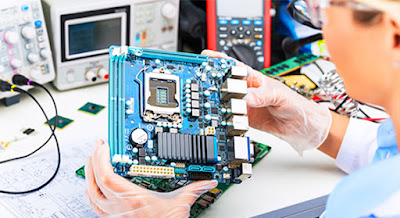
Here we have a list of things you should consider when you have to buy obsolete electronic components from an independent electronic components distributor to protect yourself against counterfeit products:
- Verify industry certifications
The electronic component distributors must adhere to industry-specific certifications such as ISO (International Standards Organization) to distribute specific electronic components. Thus, verifying that the distributor has an ISO certification is recommended to signify the supplier complies with the ISO quality management system. In addition, you can ensure the vendor’s legitimacy by checking if they are a member of the ERAI.
- ANSI/ESD S20.20 certification
If you want to buy electronic components for applications in the aerospace, automotive, telecommunication, commercial electronic, and medical equipment industries, you must verify that the distributor is ANSI/ESD S20.20 certified.
- High-quality Inventory
It is crucial to ensure that the supplier you choose features a high-quality electronic components inventory. Thus, it is best to ask the distributor regarding their quality assurance process. For example, it is recommended to gather information regarding whether they have a fully equipped facility with appropriate inventory management measures such as a moisture sensitivity program to ensure that the obsolete electronic components are stored safely. In addition, it is best to ensure the supplier complies with IDEA-STD-1010, AS6081, and other industry-specific quality assurance processes.
- Counterfeit mitigation process
Although some buyers may have an in-house counterfeit inspection team, it is not the case for most. In that case, it may benefit you to source electronic components from an independent distributor (such as Resion), which has in-house Intercept inspectors and advanced technology equipment for visual inspections, electrical testing, X-ray testing & other counterfeit mitigation measures to ensure delivering authentic parts.
- Check online reviews
You can also verify if the vendor is legitimate by researching the supplier’s reputation online. Ensure to check the electronic components distributor’s website and check online reviews by previous buyers of the company to determine whether they deliver genuine and high-quality products.
- Additional information
Before making the final purchase decision, it is recommended to discuss every aspect, including the source of the obsolete part, required documentation, waiting time, minimum order limit, delivery details, and payment procedure. It will give you an idea of when to expect the product to arrive and make arrangements accordingly for future re-ordering.
Finding a reliable and trusted independent supplier beforehand can save you from a lot of trouble whenever you may immediately require replacement for any obsolete parts in the future. Thus, it is recommended to keep a list of various independent electronic components distributors handy.
If you are looking for
an obsolete electronic component distributor that fulfills the above criteria
and is a reputable and legitimate supplier, simply contact our team for expert
assistance! Explore our extensive electronic components inventory today!
The Benefits of X-Ray Inspection Equipment in Quality Control.
Assuring product quality is of utmost importance to businesses in today's industrial world. One tool that has gained popularity for qu...