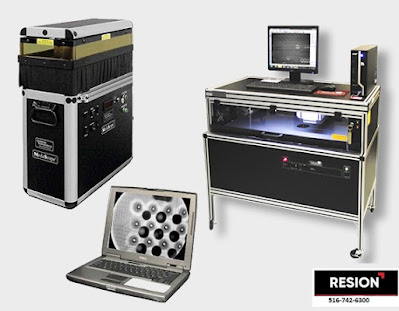
Popular Products
Popular Products


About Me

- Resion
- Resion is committed to complete customer satisfaction and regulatory compliance by maintaining a system of continuous improvement of our processes, products, and employee training. We strive to achieve best in class among our competitors.
Recent Products
What causes inventory obsolescence?

Obsolete inventory refers to the stock that becomes unusable due to lack of demand or outdated build. Businesses are usually required to keep certain inventory in stock for manufacturing, distributing, and selling purposes. Inventory obsolescences are often caused due to businesses failing to manage their inventory often because of an ineffective inventory management system. However, sometimes obsolescence may occur due to unexpected reasons resulting in financial losses for the business. Thus, the manufacturers, suppliers, and distributors need to keep an accurate track of inventory, expect shortages, and make arrangements in advance to deal with deficits or obsolescence whenever they might occur.

We have compiled a list of various reasons which may cause obsolescence and interrupt the flow of manufacturing operations:
- Discontinuation of components
Sometimes, obsolescence may occur if the manufacturer of specific software, part, or machinery decides to discontinue the production or stops providing the support/updates for the component. It usually happens when they have launched or planning to launch a new component to replace the older one. It can quickly cause obsolescence that may disrupt the production flow.
- Advancements in technology
One of the leading causes of traditional software, parts, and machinery obsolescence is the improvement in technology. The technological improvements happen at a much faster rate, making the previous technology out-of-date overnight. The manufacturers may require a considerable amount of time to make the required changes to adapt the new technology to cope up with the unexpected obsolescence.
- Lack of demand
Sometimes, inventory obsolescence occurs due to a lack of demand when new technology becomes available and becomes more popular. As a result, the previous technology’s demand may fall below a certain extent, where the manufacturers consider it a better option to discontinue the product/software.
- New regulations
And of course, if the government suddenly changes current policies or establishes a new standard for certain products’ manufacturing due to detection of toxicity or ill effects on the environment, it may cause unexpected inventory obsolescence for manufacturers and distributors.
- Long product life cycle
The product life-cycle in certain industries, such as the life-cycle of the Department of Defense (DoD) system, is usually much longer than the technology life cycle. As a result, when the technology changes, they cannot immediately change the system. Thus, it leads to inventory obsolescence challenges until the product cycle ends and new technology can be adapted.
If you want to employ an effective mitigation strategy to counter
these challenges, Resion can help. Get in touch with our team for effective
supply chain and inventory management solutions.
How To Prevent the Risk of Counterfeit in Supply Chain

How many times have we noticed a recent launch in the electronics industry quickly duplicated and available at dirt cheap prices without any restriction or regulations? Practically after every big launch of a sophisticated technology or electronics company! This counterfeiting of electronics components is a rising problem for small and big businesses alike.

Counterfeit can be simply defined as an article or an electronic component manufactured at the minimum level of separately identifiable items. Counterfeit work consists of items that are misrepresented. A noted difference is in the design, which is identical to its parent company.
How to control counterfeits components?
Primarily the most straightforward approach would be to encourage customers to avoid open market purchases and only order from franchise stores. However, it is a well-known fact that most customers are enticed by a cheap deal where they can get a similar product and also end up saving some money.
Hence, a company can ensure and practice counterfeit mitigation in product assembly and analysis stages, in the following ways:
Counterfeit electronic components can be controlled by limiting the launches. This way a company can maintain a tight reign on the purchases made by their clients, whether they are businesses or direct consumers. By limiting the purchases a company can monitor their clients’ inventory and determine the source of counterfeit.
Alternatively, a company can approve a selective list of distributors through whom only authentic components will be purchased and used. This way the counterfeit parts can be prevented from entering the supply chain as only trusted companies will be trusted for sourcing authentic electronic components.
Lastly, the inspection department plays a key role in mitigating the risk of counterfeit parts from entering the supply chain. By following a proper protocol and procedures, a thorough inspection of each component should be performed.
This whole process of counterfeit mitigation can be a daunting task for small companies specifically. Thus, it’s safe and economic to entrust reliable experts to ensure counterfeit mitigation is practiced at the product assembly stages.
The Importance of Minimizing Residual Inventory in Supply Chain Management

In any product-based industry, the production cycle is quite simple - there is a demand for a product, a company manufactures it and then sells it to the target customers. However, the world of large-scale businesses is not as straightforward as we know it. There are a lot of steps involved, thus, arises the need for the supply chain management.

What is Supply Chain Management?
Supply Chain Management is the process of handling the whole production flow, from sourcing of the raw components to the delivery of the final goods to the consumer. A supply chain company forms a network or “links”, as they’re called, to easily monitor the movement of the product till they reach its users.
The biggest benefit of supply chain management is the freedom it allows the manufacturing companies to cut extra costs and ensure faster delivery. One of the key elements in this process is maintaining tight control over the internal inventories, especially the residual inventory.
What is Residual Inventory?
Residual Inventory is the leftover stock in a company’s warehouse which could not be sold due to lack of demand among other reasons. This residual inventory can turn into a huge liability for a company, manufacturer, or retailer if retained for over three months. Hence, it is important to have a ‘safety stock’ in the right quantities.
Why is it necessary to minimize residual inventory?
A non-perishable goods-based business may find it profitable to manufacture and save up stock to fulfill any backorders. However, if the stock is not supplied for any reason, the costs will soon start adding up, making the residual inventory an expensive deadweight. Hence, the costs of transportation & storage, over-investment in stock and minimal cash flow make it essential to minimize residual inventory.
There are multiple steps and methods to reduce and control the excess inventory based on the specific type of business. Some common steps involved are:
Maintain a precise supply forecast of your stock with an improved analysis method.
Reduce manufacturing lot sizes by monitoring the manufacturing leads and order sizes.
Review suppliers’ lead and delivery times regularly.
Eliminate obsolete inventory periodically.
Minimizing residual inventory in supply chain management is crucial for a smooth cash flow and to make more room for profit rather than wasteful investments.
How to avoid purchasing suspect/counterfeit electronic chips?

Counterfeit electronic chips are among the most significant threats when sourcing any electronic parts. In fact, as per recent research, the risk of unintentionally purchasing counterfeit electronic components such as chips increases by 25% every year. Simply avoiding purchasing electronic parts from a specific country (such as China) has proven ineffective in reducing the risk of counterfeit parts. As per research conducted in 2019, more than 60% of the counterfeit electronic components were delivered from suppliers of various origins other than China. Thus, it is crucial to employ effective counterfeit mitigation strategies to prevent counterfeit electronic parts.

Here are a few ways to avoid purchasing suspect/counterfeit electronic parts
Risk assessment of various types of counterfeits
If you are considering buying electronic chips, you must be knowledgeable about the various types of counterfeits. When you are aware of the potential risk of counterfeit products, it can help you better manage the risk of counterfeits from entering your inventory.
Counterfeit detection and mitigation strategy
Many buyers decide to employ an in-house counterfeit detection and mitigation team to identify and dispose of counterfeit components. However, you can also rely on third-party certified experts to conduct the necessary testing and counterfeit inspection to ensure the delivered products meet the appropriate standards.
Sourcing products from a reliable supplier
The best way to avoid/minimize the risk of counterfeit products is to source the required electronic components from reliable electronic component distributors. The ERAI is a reliable resource for the up-to-date database of reliable suppliers. It strives to connect all sectors of the electronic supply chain from OCMs, OEMs, and CMs to Distributors, Test Labs, and Government Organizations for effective counterfeit part and supplier risk mitigation across multiple industry sectors such as defense, aerospace, medical, nuclear and commercial.
Controlling and reporting counterfeits
It is crucial for buyers to report any information about counterfeit products and fraudulent suppliers on the shared industry resources to keep all the relevant parties well-informed regarding potential risks. The shared industry information exchange resources (such as ERAI) can be highly beneficial in controlling and reducing the risks of counterfeit products.
If you are looking to source authentic electronic chip supplies from reliable electronic components distributors, contact our experts at Resion. Resion is a reliable supplier of a wide range of electronic components for military, aerospace, defense, and commercial industries. We are also the industry-leading supply chain solution provider with an extensive inventory of electronic components. Get in touch with our team for expert assistance.
What are the inspection methods used for quality control of Electronic Ceramic Components?

Electronic ceramic components are equipped with many ideal properties for different applications in power electronics. These are frequently used in manufacturing many kinds of equipment for medicine, machinery, electronic appliances, and many other industries. The ceramics are used in circuit boards and are primarily responsible for ensuring the machine’s proper functioning. Electronic ceramic components offer a higher conductivity, making the material ideal for various applications in communication systems, aircraft circuit boards, satellite technology, wireless devices, and more. However, with rapid IT innovations, the quality control for these components has become much more challenging.
Following are the various inspection methods used for quality control of electronic ceramic components:
Visual inspection
Visual inspection is the primary quality control method used for every type of electronic appliance to determine if there are any visible defects in the electronic appliances or parts. An InterCEPT certified inspector inspects the packaging and labels on the electronic component for a detailed visual examination for any typos, fake numbering, blacktopping, and many other such indicators.
X-Ray testing
If the visual inspection does not reveal any discrepancies, next, X-Ray inspection is used to verify the inner workings and structure of the electronic ceramic components. If there are any defects, unusual size, exceeding quantity, or indication of tempering, it will be revealed through X-ray testing. The images of the component can be compared with the images of the original parts to detect any counterfeits.

Decapsulation
Sometimes even X-Ray testing cannot give conclusive results. Thus, additional testing such as failure analysis testing techniques is used to verify the authenticity of the electronic ceramic parts. Decapsulation is a destructive test that is usually performed on a sample component using failure analysis (FA), constructional analysis (CA), and destructive physical analysis (DPA) techniques. In decapsulation, an internal visual inspection is first conducted using a high-powered microscope to verify the manufacturer’s markings, defects, typography, part numbers, mechanical accuracy, and authenticity. Next, chemical etching methods are used to verify each component used in the manufacturing.
There are many different types of decapsulation methods used for different kinds of electronic device components, depending on their application purposes. Various chemicals (such as sulfur acid, nitric acid, etc.) are used for decapsulation, rendering the sample unusable in most cases since it is a destructive testing method. Therefore, it is usually performed after radiography, external visual examination, leak check, and other inspection testings as required depending on the component to ensure its authenticity. If the sample fails the analysis, the whole batch will need to be discarded.
The electronic ceramic component inspections can be conducted by your in-house certified team or a certified third-party provider offering reliable visual, x-ray, and decapsulation testing services. If you lack the in-house quality control capabilities, get in touch with our team for reliable inspection services to meet all your needs.
Role of the x-ray inspection system in enhancing quality control and counterfeit mitigation in the electronics industry

Counterfeit electronics components are the biggest threat to the electronics industry supply chain. As per the statistics, almost 20% of electronic components in distributors' supply chains are found to be counterfeit every year. Counterfeit electronic parts which are not identified on time can find their way as part of a computer motherboard, monitor, or other electrical appliance. They can cause functionality issues, short circuit risk, overheating, or other problems which can lead to the failure of the machine. As per research, counterfeit parts lead to damages costing more than $100 million every year. Thus, to minimize the risk of counterfeit components and enhance quality control, many inspection and testing techniques are used by the distributors and suppliers in the electronics industry, such as visual testing, X-ray inspection, electrical testing, and more.

How can X-Ray inspection help?
X-Ray inspection is one of the most widely used techniques for counterfeit mitigation and effective quality control in the electronics industry. The X-ray inspection systems are specifically designed to verify the inner structure and functional elements of electronic devices without opening or using destructive testing techniques. X-Ray inspection is used to identify components inside the package for their shape and size accuracy compared to the images from the original part made by the manufacturer. It helps identify any defects, proof of tampering, or counterfeit parts in the electronics industry.
The electronics X-Ray inspection is usually the next step after the visual inspection of the electronic component has been performed. It enables electronic suppliers and buyers to ensure the authenticity of the product and detect fraud. The failure to find a defective component may lead to fatal results. Therefore, if the authenticity of a supplied product cannot be verified using visual inspection or electronic testing, an X-Ray inspection is conducted to find any abnormalities in the electronic parts’ composition.
X-Ray inspection is a preferred method of counterfeit mitigation and quality control as it is a completely non-invasive and non-destructive testing technique that is relatively cost-effective. It saves the distributors from the risk of destroying or disassembling a product for testing with destructive methods such as decapsulation testing, which can be quite time-consuming.
If you are looking for a reliable supplier with extensive experience in supplying electronic components and in-house X-ray inspection systems for counterfeit detection, get in touch with our team for all your requirements.
What are the biggest challenges with inventory management?

Manufacturing companies heavily depend on an efficient inventory management solution to ensure smooth production. It is especially crucial for those industries which deal in electronic product manufacturing as the production may suffer if there is a lack of inventory. As per a 2018 estimate, the electronic manufacturing industry was valued at over half a trillion dollars. Other than the electronics manufacturing industry, many other businesses depend on component sourcing for their operating equipment and machines, such as military, defense, commercial businesses, and more. To ensure the smooth operation of business activities, they need an appropriate electronic parts supply on time. Therefore, an up-to-date, efficient inventory management system is crucial for both small and large enterprises.

As inventory management is a complex process, it presents many challenges for manufacturers and other industries, such as the following:
Maintaining inventory levels
Businesses must maintain an appropriate level of inventory at all times. However, doing so manually via different software's and spreadsheets can be very time-consuming and redundant. Moreover, it is vulnerable to errors which may lead to problems in maintaining appropriate levels of inventory.
An inefficient inventory tracking process
Many companies continue to use old and outdated methods of inventory tracking. It can make it harder and time-consuming to locate any specific parts in the inventory when needed. Updating the Inventory Management System with advanced technology and features can be highly beneficial in efficiently managing and tracking required inventory.
Quality assurance
Maintaining high-quality inventory and ensuring quality assurance can be quite challenging for large manufacturers. Quality assurance can be a labor-intensive task if there is no proper system to keep records of quality inspections. It may lead to inadequate, wrong, or delayed shipments. An advanced Inventory Management System can be highly effective in keeping a record of inventory quality assurance which helps you make strategic decisions for inventory maintenance and delivery.
Inventory loss
If the manufacturer’s inventory includes perishables or high-value inventory stock, which need to be kept under specific conditions and temperatures, you need to have a system in place to ensure the stock is well taken care of. An advanced Inventory Management System can help prevent inventory loss and keep you up-to-date regarding the inventory status.
Inventory management is a highly complex process. If you are facing any challenges in maintaining your inventory efficiently, get in touch with our team for expert efficient Inventory Management Solutions.
The Benefits of X-Ray Inspection Equipment in Quality Control.
Assuring product quality is of utmost importance to businesses in today's industrial world. One tool that has gained popularity for qu...